Hello! Welcome to visit Foshan Zhongda New material Co., LTDOfficial website! Email:weiwenyao213@gmail.com

NEWS
NEWSNEWS
NEWS▋Crystal marks in the long river of history
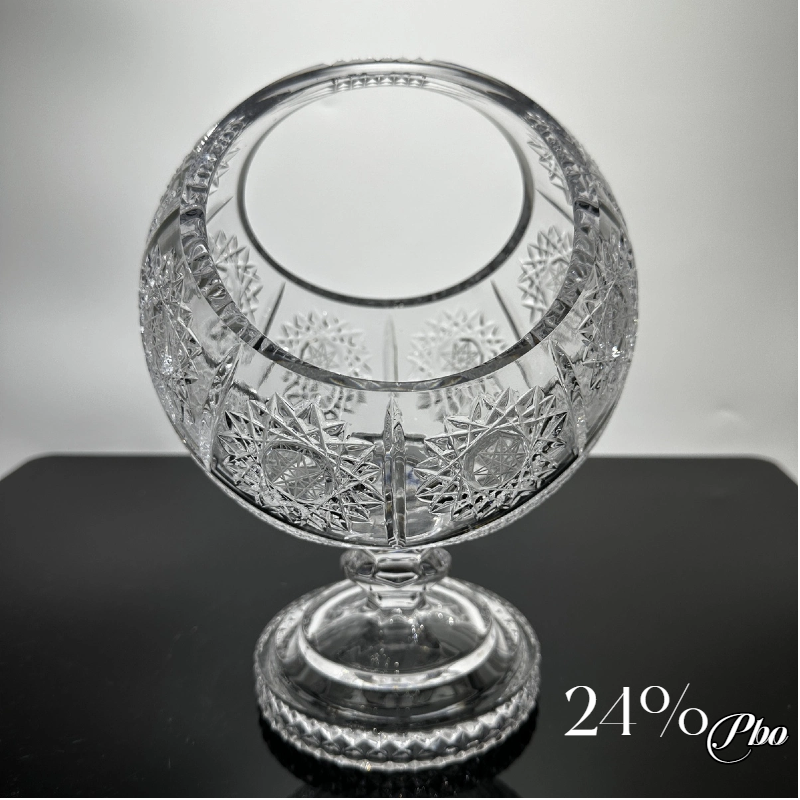
The origin of crystal vases can be traced back to the production of glassware in ancient Egypt, while true crystal products were born in Venice in the 15th century. The craftsmen of Murano Island created lead crystals with a refractive index of up to 1.7 by adding lead oxide, which can exhibit rainbow like dispersion after cutting. The diamond cutting technique developed in Bohemia in the 18th century created 58 standard facets on the surface of vases, allowing light to create a starry effect inside the vessel. The crystal vases from the George II era, collected by the British Museum, still showcase the intricate aesthetics of Rococo art through the Baroque patterns etched on their bodies.
▋ The craft code of interweaving light and shadow
The production of modern crystal vases requires three stages of tempering: first, silicon dioxide, lead oxide, and potassium carbonate are melted to 1600 ℃ to form liquid glass. After blowing or casting, craftsmen use diamond cutting tools for manual cutting. Swarovski's patented aurora cutting technology controls the cutting angle through a computer, allowing the vase to produce dynamic light and shadow even in static conditions. The Czech crystal brand Moser's unique relief technique can carve three-dimensional patterns of varying depths on a 3mm thick bottle wall. The error of this precision process needs to be controlled within 0.1 millimeters, and each finished product must undergo twelve optical inspections.
▋The spiritual container in life rituals
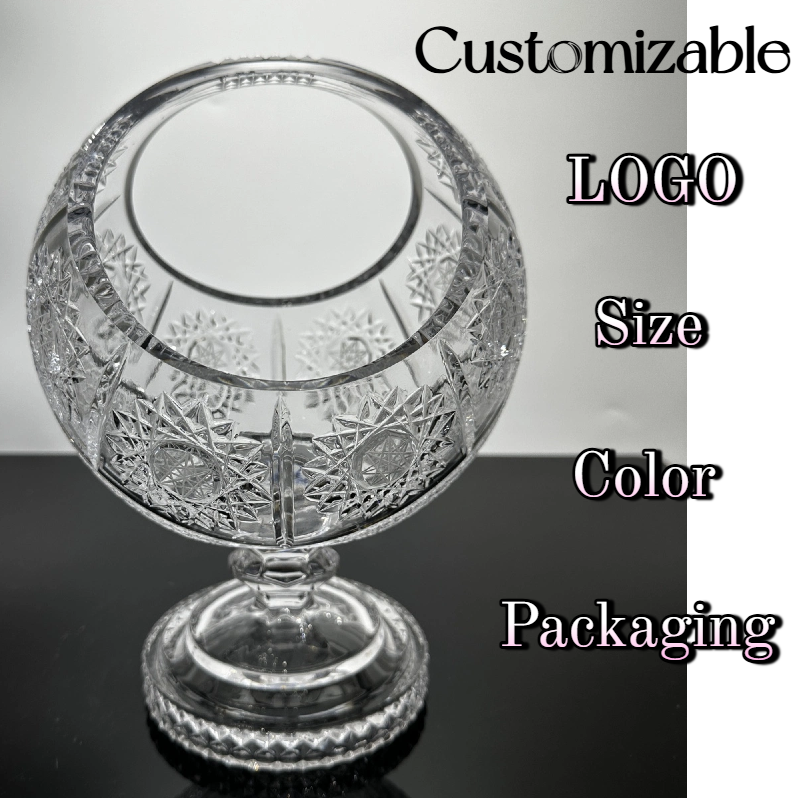
In the Eastern tea ceremony, crystal vases are often used as "flower vases", and their transparent material can clearly show the water absorption state of the flower stem, becoming a witness to "one period, one session". During the French Art Nouveau movement, designer Gall é combined crystal vases with silverware to create the "Plant Specimen" series, creating a dialogue of life between solidified glass patterns and real plants. The glass sculpture "Persian Garden" by contemporary artist Dale Chihuly reconstructs the form of a traditional vase with a twisted crystal bottle body, challenging people's cognitive boundaries of containers. In psychological research, it has been proven that the refracted light of crystal vases can enhance spatial pleasure by 15%, and their presence itself becomes a healing environmental element.
 Address:Company Address: 2nd Floor, Factory 3, Shachan Long Industrial Zone, Luocun Street, Shishan Town, Nanhai District, Foshan City
 Email:weiwenyao213@gmail.com
 WhatsApp:+8613728511138
WeChat us